
مشخصات کتاب
-
Sebastian Bergmann and Stefan Priebsch
-
2011
-
انگلیسی
-
5302
-
465
-
0
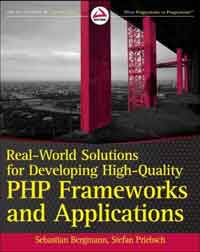
دانلود کتاب PHP Frameworks and Applications
این کتاب آموزش برنامه نویسی که در بردارنده ی اطلاعات عمیق و راهنمای گام به گام می باشد، شما را در طول فرایند ایجاد، حفظ، و توسعه ی نرم افزار پایدار با کیفیت بالا، راهنمایی خواهد کرد. در کتاب PHP Frameworks and Applicationsمتخصصان برجسته ی PHP به منظور توسعه ی اپلیکیشن ها و فریم ورک های PHP با کیفیت بالا که می توانند بسته به نیازمندی های در حال تغییر تجاری به راحتی منطبق گردند، مطالعات موردی واقعی را ارائه داده اند. آن ها رویکردهای متفاوتی را برای حل مسائل رایج مربوط به تضمین کیفیت و توسعه پیشنهاد می کنند که هر توسعه دهنده ای نیاز است با آن ها آشنا شود. o توضیح فرایند ایجاد اپلیکیشن ها و فریم ورک های PHP با کیفیت بالا که می توانند بسته به نیازمندی های در حال تغییر تجاری به راحتی سازگار گردند. o پوشش دادن طرح ریزی، اجرا، و اتوماسیون سازی تست های مربوط به لایه ها و ردیف های مختلف یک اپلیکیشن وب o نمایش چگونگی ارائه ی یک پروسه ی موفق توسعه ی اپلیکیشن o به اشتراک گذاری مطالعات موردی واقعی از شرکت های معروف و متخصصان آن ها همراهی با این کتاب آموزش php موجب می شود که با تلاش و هزینه ای معقول، نحوه ی ساخت اپلیکیشن ها و فریم ورک های با کیفیت عالی را فرا بگیرید.
Packed with in-depth information and step-by-step guidance, this book escorts you through the process of creating, maintaining and extending sustainable software of high quality with PHP. World-renowned PHP experts present real-world case studies for developing high-quality applications and frameworks in PHP that can easily be adapted to changing business requirements. . They offer different approaches to solving  typical development and quality assurance problems that every developer needs to know and master.
•	Details the process for creating high-quality PHP frameworks and applications that can easily be adapted to changing business requirements
•	Covers the planning, execution, and automation of tests for the different layers and tiers of a Web application
•	Demonstrates how to establish a successful development process
•	Shares real-world case studies from well-known companies and their PHP experts
With this book, you’ll learn to develop high-quality PHP frameworks and applications that can easily be maintained with reasonable cost and effort.
FOREWORD xxi
INTRODUCTION xxiii
PART I: FOUNDATIONS
CHAPTER 1: SOFTWARE QUALITY 3
External Quality 4
Internal Quality 5
Technical Debt 5
Constructive Quality Assurance 7
Clean Code 8
Explicit and Minimal Dependencies 9
Clear Responsibilities 9
No Duplication 9
Short Methods with Few Execution Branches 9
Software Metrics 10
Cyclomatic Complexity and npath Complexity 10
Change Risk Anti-Patterns (CRAP) Index 11
Non-Mockable Total Recursive Cyclomatic Complexity 11
Global Mutable State 11
Cohesion and Coupling 12
Tools 12
PHPUnit 12
phploc 12
PHP Copy-Paste-Detector (phpcpd) 12
PHP Dead Code Detector (phpdcd) 13
PHP_Depend (pdepend) 13
PHP Mess Detector (phpmd) 13
PHP_CodeSniff er (phpcs) 13
bytekit-cli 13
PHP_CodeBrowser (phpcb) 13
CruiseControl and phpUnderControl 13
Hudson 14
Arbit 14
Conclusion 14
CHAPTER 2: SOFTWARE TESTING 15
Black Box and White Box Tests 15
How Many Tests Are Needed? 16
System Tests 17
Browser Testing 17
Automated Tests 18
Test Isolation 19
Acceptance Tests 20
Limits of System Tests 20
Unit Tests 21
Return Values 23
Dependencies 24
Side Eff ects 25
Real-Life Example 25
Analyzing the Code to Test 28
Setting Up a Test Environment 29
Avoid Global Dependencies 31
Test Independently from Data Sources 32
Testing Asynchronous Events 37
Storing Changes in the Database 41
Unpredictable Results 42
Encapsulating Input Data 44
Further Refl ections 45
Conclusion 46
PART II: BEST PRACTICES
CHAPTER 3: TYPO3: THE AGILE FUTURE
OF A PONDEROUS PROJECT 49
Introduction 49
The History of TYPO3: Thirteen Years in Thirteen Paragraphs 49
Daring to Start Over! 51
Our Experience with Testing 51
Policies and Techniques 52
Bittersweet Elephant Pieces 53
Test-Driven Development 53
Tests as Documentation 54
Continuous Integration 55
Clean Code 56
Refactoring 57
Programming Guidelines 58
Domain-Driven Design 59
Course of Action in Development 60
Developing New Code 60
Extending and Modifying Code 61
Optimizing Code 61
Speed 61
Readability 63
Finding and Fixing Bugs 63
Disposing of Old Code 63
Test Recipes 64
Inadvertently Functional Unit Test 64
Access to the File System 64
Constructors in Interfaces 65
Testing Abstract Classes 66
Testing Protected Methods 66
Use of Callbacks 68
Into the Future 69
CHAPTER 4: UNIT TESTING BAD PRACTICES 71
Why Test Quality Matters 71
Bad Practices and Test Smells 72
Duplication in Test Code 73
Assertion Roulette and Eager Test 74
Fragile Test 76
Obscure Test 78
Problems with Global State 78
Indirect Testing 80
Obscure Test Names 82
Lying Test 83
Slow Test 84
Conditional Logic in Tests 85
Self-validating Tests 87
Web-surfi ng Tests 87
Mock Overkill 88
Skip Epidemic 90
Conclusion 90
CHAPTER 5: QUALITY ASSURANCE AT DIGG INC. 91
Problems We Are Facing 91
Legacy Code Base 92
How Do We Solve These Problems? 93
Size Does Matter 93
Team Size 94
Project Size 94
Code Size 94
Unit Testing and You 94
Choosing a Testing Framework 95
Working with an Expert 95
One Week in a Room 95
Training Our Team 95
Writing Testable Code 98
Avoid Static Methods 98
Dependency Injection 100
Mock Objects 100
Overview 100
Database 101
Loosely Coupled Dependencies 101
Subject/Observer for Testing Class Internals 102
Memcached 103
Mocking a Service-Oriented Architecture 104
Model 104
Service Query 105
Service Endpoint 105
The Base Classes 105
Digg’s Quality Assurance Process 107
Testing 108
Planning the Testing Eff ort 108
Tasks 108
Automation 108
Benefi ts 109
Testing Early 109
Testing Often 109
Challenges 110
Conclusion 111
PART III: SERVERS AND SERVICES
CHAPTER 6: TESTING SERVICE-ORIENTED APIS 115
The Problems 117
Solutions 118
API Credentials 118
API Limits 121
Offl ine Testing of Service Protocols 122
Offl ine Testing of Concrete Services 126
Conclusion 130
CHAPTER 7: TESTING A WEBDAV SERVER 131
About the eZ WebDAV Component 131
WebDAV 131
Architecture 133
Development Challenges 135
Requirements Analysis 135
TDD after RFC 136
Testing a Server 137
Automated Acceptance Tests with PHPUnit 139
Capturing Test Trails 140
Test Recipe 141
Integration into PHPUnit 142
A Custom Test Case 142
The Acceptance Test Suite 146
Acceptance Tests by Example 147
Conclusion 149
PART IV: ARCHITECTURE
CHAPTER 8: TESTING SYMFONY AND SYMFONY PROJECTS 153
Testing a Framework 154
The symfony Release Management Process 154
Long-term Support 154
Code Coverage 155
Tests versus Real Code 155
Running the Test Suite 156
Main Lessons Learned 156
Never Use the Singleton Design Pattern in PHP 156
Decouple Your Code with Dependency Injection 158
Lower the Number of Dependencies between Objects with an Event
Dispatcher 159
Testing Web Applications 161
Lowering the Barrier of Entry of Testing 161
Unit Tests 162
Easy to Install 162
Easy to Learn 163
Fun to Use 165
Functional Tests 165
The Browser Simulator 166
The Fixtures 168
The CSS3 Selectors 168
Testing Forms 169
Debugging 169
Conclusion 170
CHAPTER 9: TESTING THE EZCGRAPH COMPONENT 171
Development Philosophy 172
Graph Component 172
Architecture 173
Test Requirements 174
Driver Mocking 175
Mock the Driver 175
Multiple Assertions 176
Structs 177
Expectation Generation 178
Conclusion 178
Testing Binary Data 179
The Drivers 179
Expectation Generation 179
SVG 180
XML Comparison 180
Floating-point Problems 181
Bitmap Creation 181
Bitmap Comparison 182
GD Version Diff erences 183
Flash 183
The Assertion 184
Conclusion 185
CHAPTER 10: TESTING DATABASE INTERACTION 187
Introduction 187
Reasons Not to Write Database Tests 188
Why We Should Write Database Tests 189
What We Should Test 190
Writing Tests: Mocking Database Connections 191
Writing Tests: PHPUnit Database Extension 191
The Database Test Case Class 192
Establishing the Test Database Connection 193
Creating Data Sets 196
XML Data Sets 197
Flat XML Data Sets 199
CSV Data Sets 200
YAML Data Sets 201
Database Data Sets 203
Data Set Decorators 204
Generating Data Sets 209
Data Operations 209
Creating Tests 211
Testing the Loading of Data 211
Testing the Modifi cation of Data 215
Using the Database Tester 218
Applying Test-Driven Design to Database Testing 220
Using Database Tests for Regression Testing 220
Testing Problems with Data 221
Testing Problems Revealed by Data 222
Conclusion 222
PART V: Q&A IN THE LARGE
CHAPTER 11: QUALITY ASSURANCE AT STUDIVZ 225
Introduction 225
About studiVZ 226
Acceptance Tests 227
Acceptance Tests in Agile Environments 227
Selenium 228
The Selenium Extension of PHPUnit 229
The Technical Setup of studiVZ 230
Development Environment 230
Test Environment 231
Best Practices 232
Sins of Our Youth 232
Monolithic Tests 232
Static Users 233
Strategy Change 234
Atomic Tests with Dynamic Test Data 234
Robust Selenium Tests 235
Test Scope Must Be Clear 235
Common Functionality or Browser Compatibility as Well? 236
Fix Tests Right Away! 236
Stabilize Locators, and Use IDs 237
Speed, the Sore Subject 238
Recipes for Last-Minute Features 239
Tests Are Software Too 240
Capture and Replay versus Programming Tests 240
The Team: A Good Mix 242
We Need a DSL 242
Internal DSL 243
Testing_SeleniumDSL 1.0 243
Problem: Context Sensitivity 245
Testing_SeleniumDSL 2.0 — A Draft 245
State and Outlook on Version 2.0 246
Conclusion 246
CHAPTER 12: CONTINUOUS INTEGRATION 249
Introduction 249
Continuous Integration 251
Confi guration 251
Build Management and Automated Tests 251
Version Management 252
Continuous Integration 252
Static Analysis 253
Code Clones 253
Refactoring 253
Software Metrics 254
Classic Metrics 255
Object-Oriented Metrics 259
RATS 262
Installation 263
Confi guration 264
Static Tests 266
Programming Conventions 266
Coding Guidelines 268
Gradual Introduction into Legacy Projects 269
Coding Standards in the Daily Work 270
Syntax Analysis 271
Dynamic Tests 272
Reporting 272
Notifi cation in the Case of Errors 272
Statistics 272
PHP_CodeBrowser 273
Deliverables 274
Operations 275
Advanced Topics 276
Continuous Deployment 276
Using a Reverse Proxy 277
Continuous Integration and Agile Paradigms 278
Conclusion 278
CHAPTER 13: SWOODOO: A TRUE AGILE STORY 281
Introduction 281
Evolution: Only the Strong Survive 282
How We Reached the eXtreme Side 285
And While We Are Working... 288
The Art of Evolution 292
Lack of Experience 293
The Java-developer-coding-in-PHP Phenomenon 294
The Nobody-but-me-understands-my-code Developer 296
Conclusion 298
PART VI: NON-FUNCTIONAL ASPECTS
CHAPTER 14: USABILITY 301
Anything Goes, But What Is the Price? 303
Design Aspects 304
Accessibility 304
Readability 304
Labels for Form Elements 305
Navigating by Keyboard 305
Eff ective Contrast 306
Logo Links to Home Page 307
Alternative Texts for Images 307
Background Image in Background Color 307
Usable Print Version 307
Visible Links 307
Good Bookmarks 307
No Frames 308
Scalable Fonts 308
Technical Aspects 308
Performance 308
Semantic Code 309
Fewer Requests 309
CSS Sprites 309
JavaScript on Bottom, CSS on Top 310
Link CSS Instead of Importing 310
JavaScript 310
User Guidance 310
The “Fold” Myth 311
Feedback on Interaction 311
Navigation 312
Pop-ups and Other Annoyances 312
Habits and Expectations 313
Fault Tolerance and Feedback 313
Testing Usability 313
Conclusion 315
CHAPTER 15: PERFORMANCE TESTING 317
Introduction 317
Tools 318
Environmental Considerations 319
Load Testing 320
Apache Bench 321
Pylot 322
Other Load Testing Tools 324
Profi ling 324
Callgrind 325
KCachegrind 328
APD 329
Xdebug 330
XHProf 331
OProfi le 333
System Metrics 334
strace 334
Sysstat 335
Custom Instrumentation 337
Common Pitfalls 338
Development versus Production Environments 338
CPU Time 338
Micro-Optimizations 338
PHP as the Glue 339
Priority of Optimization 339
Conclusion 340
CHAPTER 16: SECURITY 341
What Is Security? 341
Secure by Design 342
Operations 342
Physical Access 343
Software Development 344
No Security by Obscurity 344
Separation of Concerns 344
A Matter of Rights 345
Error Handling 345
Basic Settings 346
What Does Security Cost? 346
The Most Common Problems 347
A10: Unvalidated Redirects and Forwards 347
A9: Insuffi cient Transport Layer Protection 348
A8: Failure to Restrict URL Access 349
A7: Insecure Cryptographic Storage 349
A6: Security Misconfi guration 350
A5: Cross Site Request Forgery (CSRF/XSRF) 351
A4: Insecure Direct Object References 351
A3: Broken Authentication and Session Management 352
A2: Cross-Site Scripting (XSS) 353
A1: Injection 354
Conclusion 355
CHAPTER 17: CONCLUSION 357
Bibliography 359
INDEX 365

دانلود کتاب Beginning PHP and MySQL 3
نویسنده این کتاب دارای بیش از 10 سال تجربه کار در زمینه آموزش برنامه نویسی با این فن آوری ها می باشد، و این کتاب را با نمونه های عملی و بینشی عمیق و وسیع تهیه کرده است. بر این اساس، به شما توصیه می کنیم که به این کتاب به عنوان کتابی مرجع در زمینه آموزش php نگاه کنید
نویسنده: W. Jason Gilmore
زبان: انگلیسی

دانلود کتاب Beginning PHP and MySQL E-Commerce
کتابBeginning PHP and MySQL E-Commerce مراحل گام به گام طراحی و ساخت اپلیکیشن قابل گسترش برای یک وبسایت تجاری را آموزش می دهد. این کتاب با ارائه ی مثال واقعی از یک وبسایت فروش تی شرت، به شما می آموزد که چگونه می توانید یک کاتالوگ محصولات را ایجاد و کنترل نمایید
نویسنده: Cristian Darie و Emilian Balanescu
زبان: انگلیسی

دانلود کتاب Practical Web 2.0 Applications with PHP
در این کتاب، تکنولوژی های مربوط به توسعه ی زبان های PHP، MySQL، CSS، HTML، و JavaScrip/Ajax، در کنار هم ارائه شده اند تا به شما نشان دهند چگونه می توان اپلیکیشن های بسیار چشم گیری را، از لحظه ی طراحی و برنامه نویسی گرفته تا اجرای نهایی کد، و بدون نیاز به اصول غیر ضروری دیگر که عمدتا شما را به سمت عقب سوق می دهند، ایجاد نمود.
نویسنده: Quentin Zervaas
زبان: انگلیسی